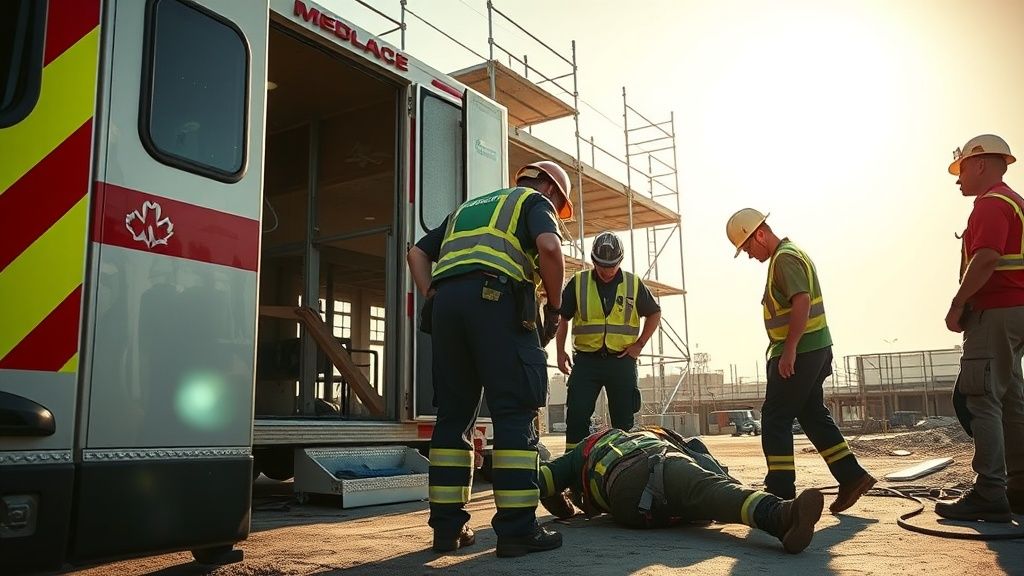
If you've been seriously hurt at work in California, one question rises above everything else: how much is this case worth?
The answer depends heavily on the type of injury. Some injuries — a sprained wrist, a minor laceration — resolve with limited medical treatment and modest temporary disability. Others generate awards in the hundreds of thousands of dollars, or more, because they cause permanent physical damage, require lifetime medical care, or disable a worker from ever returning to their trade.
We've recovered over $150,000,000 for injured workers across Southern California. The cases that drive the largest awards share a pattern — and that pattern almost always starts with one of the six injury types below.
Here's what drives settlement value in California workers' comp, and what the biggest claims have in common.
Quick answer — the 6 accident types most likely to produce the largest workers' comp settlements in California:
- Falls from height — catastrophic spine and brain injuries with the highest permanent disability ratings
- Crush and machinery injuries — amputations and limb damage generating near-100% whole-person impairment
- Severe burns — years of surgery plus lifetime medical awards
- Traumatic brain injuries — unpredictable future-care costs compounding settlement value
- Back and spine injuries requiring surgery — long temporary disability plus high permanent disability, with aggressive insurer apportionment tactics
- Toxic exposure and occupational disease — lifetime medical exposure plus potential third-party claims
1. Falls from Height
Falls from height are the single most common cause of the largest workers' comp settlements in California, because they produce spinal cord injuries and traumatic brain injuries with permanent disability ratings that can reach 100% whole-person impairment.
Construction workers, roofers, painters, and warehouse employees who fall from scaffolding, ladders, or elevated platforms routinely sustain injuries that end careers permanently. A fall of just ten feet onto a hard surface can fracture vertebrae, sever spinal cord tissue, or cause the kind of skull trauma that produces lasting cognitive deficits.
Why settlements are so large:
Under Cal. Lab. Code §4658, permanent disability (PD) payments are calculated as a weekly benefit tied to the worker's impairment percentage. The DWC uses the AMA Guides to the Evaluation of Permanent Impairment, 5th Edition — as required by Cal. Lab. Code §4660 — to convert a doctor's findings into a whole-person impairment (WPI) rating. A complete spinal cord injury causing paraplegia can reach 100% WPI. At 100% PD, the weekly benefit under §4658 is paid for life.
When you add future medical treatment — spinal cord injuries require ongoing attendant care, adaptive equipment, and pain management indefinitely — the lifetime value of a catastrophic fall case can easily exceed $1,000,000 even before any third-party negligence claim is evaluated.
Practical takeaway: If you were injured in a construction fall, the single most important step is getting an accurate whole-person impairment rating from a treating physician or a QME (qualified medical evaluator) who understands the WCAB rating schedule — because the PD percentage drives every dollar of your award.
2. Crush and Machinery Injuries
Crush injuries and traumatic amputations from industrial equipment, presses, conveyors, and forklifts generate some of the highest permanent disability awards in the California workers' comp system — because the impairment is both permanent and severe.
A worker who loses a hand or an arm at a manufacturing facility faces a WPI rating that can run from 50% to close to 100% depending on the level of amputation and the dominant hand involved. Under the AMA Guides 5th Edition — which California applies under Cal. Lab. Code §4660.1 for injuries after January 1, 2013 — the loss of a dominant upper extremity typically produces a WPI rating that, after the California DIR age and occupation adjustments, translates into a high permanent disability percentage.
Why settlements are so large:
Three components compound the value of a crush or amputation case:
- Permanent disability payments under §4658 — paid weekly over a long period
- Lifetime prosthetic and medical care under Cal. Lab. Code §4600, which requires the employer to pay for all medical treatment reasonably required to cure or relieve the injury — including prosthetic devices, fittings, and replacement over the worker's lifetime
- Vocational rehabilitation — a supplemental job displacement benefit (SJDB) voucher under Cal. Lab. Code §4658.7 when the worker cannot return to their prior occupation
A bilateral hand amputation, for example, can generate a lifetime medical award for prosthetics alone that dwarfs the PD payment. When you account for all three components, total case value routinely reaches seven figures.
Practical takeaway: Crush and amputation cases require a specialist who can document future prosthetic and medical costs in detail — insurers routinely undervalue the lifetime medical component because it is the hardest for an unrepresented worker to calculate independently.
3. Severe Burns
California workers' comp also covers lifetime medical treatment under Labor Code Section 4600 — meaning a serious burn or toxic-exposure case can carry a lifetime medical award worth far more than the disability payment itself.
Chemical burns from industrial solvents, electrical burns from live equipment, and flash-fire burns from oil, gas, or manufacturing environments share one characteristic that drives settlement value: treatment never really ends. Second- and third-degree burns covering significant body surface area require initial hospitalization, repeated skin-graft surgeries, physical therapy, and then years of scar-management treatment — and new complications arise throughout the worker's life.
Why settlements are so large:
Under Cal. Lab. Code §4600, all reasonably required medical treatment is the employer's responsibility indefinitely. A 40-year-old worker who sustains severe burns covering 30% of their body surface area is entitled to that care for the next 40-plus years. Multiply the annual cost of burn specialist visits, scar therapy, reconstructive surgery, and pain management by decades — and the lifetime medical component alone can reach $500,000 to $1,500,000 in present-value terms.
PD ratings for severe burns depend on the extent of disfigurement, loss of function in affected joints, and nerve damage. Electrical burns frequently cause additional internal damage — cardiac arrhythmias, peripheral nerve injury — that generates separate impairment ratings that add to the total PD percentage.
Burn cases also carry higher potential for a Compromise and Release (C&R) settlement — where the worker receives a single lump-sum payment that closes out both the PD and the future medical — rather than a Stipulation with Request for Award, which keeps future medical open. A specialist firm evaluates which settlement structure maximizes total value for each specific client based on age, injury severity, and the projected cost of future care.
Practical takeaway: Never close out the future medical component of a severe burn case without a detailed life-care plan prepared by a medical expert — the insurer's offered lump sum almost always undervalues it.
4. Traumatic Brain Injuries
A traumatic brain injury settlement must account for future care costs that may not appear in the first year — neuropsychological treatment, home health aides, and lost earning capacity that compounds over a lifetime.
TBIs caused by falls, being struck by objects, or vehicle accidents on the job are among the most difficult workers' comp cases to value accurately — and the most consequential to get wrong. The reason: TBI symptoms evolve. A worker who appears to have recovered basic physical function in the first six months may develop persistent cognitive deficits, emotional dysregulation, chronic headaches, and sleep disorders that prevent them from returning to any meaningful employment.
Why settlements are so large:
TBI cases carry value across multiple workers' comp benefit categories simultaneously:
- Temporary total disability (TTD) under Cal. Lab. Code §4653 — paid at two-thirds of the pre-injury average weekly wage, up to the state maximum, during the entire recovery period
- Permanent disability — WPI ratings for TBI can be substantial under the AMA Guides 5th Edition, particularly when the injury produces measurable neuropsychological deficits documented by testing
- Future medical under §4600 — neurologist visits, neuropsychology treatment, and in severe cases, residential or home-based care
- SJDB voucher under §4658.7 when cognitive impairment prevents return to the pre-injury occupation
The most common insurer tactic in TBI cases is to dispute the severity of the impairment — arguing that subjective complaints (headaches, memory problems, fatigue) are not supported by objective imaging. A specialist firm responds by building a comprehensive neuropsychological record through the treating physician and, when necessary, a QME panel under Cal. Lab. Code §4062.2, ensuring that functional cognitive deficits are properly documented before any PD rating is issued.
Practical takeaway: Do not accept a PD rating in a TBI case until a neuropsychological evaluation has been completed and reviewed by an attorney — insurers routinely rate TBI based on imaging alone, which systematically undervalues functional impairment.
5. Back and Spine Injuries Requiring Surgery
Back and spine injuries are the most common serious workers' comp claims in California — and also the most aggressively contested by insurance carriers. When a back injury requires surgery, the case value increases substantially through a combination of long TTD payments and high PD ratings. But the insurer's primary weapon is apportionment.
Why settlements are so large:
A lumbar fusion surgery, for example, generates a recovery period measured in months. TTD under Cal. Lab. Code §4653 pays two-thirds of the pre-injury wage throughout that entire period — meaning a worker earning $1,200 per week who requires six months of post-surgical recovery receives approximately $37,000 in TTD before the case reaches maximum medical improvement (MMI).
After MMI, the PD rating for a spinal surgery case under the AMA Guides 5th Edition can range from 15% to 50% WPI depending on the level of surgery, residual range-of-motion limitations, and neurological deficits. Under Cal. Lab. Code §4658, a 30% PD rating for a worker under 40 translates into weekly PD payments for years — totaling well over $100,000 in PD benefits alone.
Apportionment disputes under California Labor Code Section 4663 are the most common way insurance carriers try to reduce a settlement for back and spine injuries — a specialist firm fights apportionment by documenting that the industrial injury, not a pre-existing condition, caused the disabling impairment.
Under Cal. Lab. Code §4663, if a portion of the worker's permanent disability is caused by a pre-existing condition or degenerative disease rather than the work injury itself, the employer is only liable for the industrial portion. Insurers routinely use this provision to argue that a worker's herniated disc would have happened anyway — and reduce the award by 30%, 40%, or more. Under Cal. Lab. Code §4664, the employer's liability is further limited to the percentage of permanent disability directly caused by the industrial injury, separate from any prior awards.
A specialist firm fights apportionment by building a detailed medical record that documents the mechanism of injury, the acute onset of symptoms, and the treating physician's opinion that the industrial event — not a pre-existing condition alone — caused the disabling impairment.
Practical takeaway: Never accept an apportionment reduction in a back-surgery case without a second medical opinion from a QME who has reviewed the full imaging history — the difference between a 0% and 40% apportionment finding can change your settlement by $50,000 or more.
6. Toxic Exposure and Occupational Disease
Workers' comp is not the only source of recovery in a toxic-exposure case — if a third-party manufacturer's defective product caused the exposure, a separate personal injury claim can be filed alongside the workers' comp claim.
Mesothelioma from asbestos exposure, silicosis from silica dust, occupational cancers from chemical exposure, and chronic lung disease from industrial fumes represent a distinct category of workers' comp cases — one where the injury develops over years or decades, is often diagnosed long after the worker has left the job, and carries lifetime medical costs that can dwarf any single PD award.
Why settlements are so large:
California's date-of-injury rule for occupational disease uses the "date of injury" as the date the worker first suffered disability and knew or should have known it was work-related — under Cal. Lab. Code §5412. This extends the filing window for conditions like mesothelioma, which may not be diagnosed until 20 to 40 years after asbestos exposure.
Three factors compound the value of toxic-exposure cases:
- Lifetime medical under §4600 — mesothelioma treatment, for example, involves chemotherapy, surgery, immunotherapy, and palliative care over the remaining life of the worker
- High PD ratings — occupational cancers and severe respiratory disease produce WPI ratings that often reach 70% to 100%
- Third-party claims — if the worker was exposed to a product manufactured by a party other than the employer (an asbestos-containing insulation material, a defective respirator, a chemical produced by a supplier), a separate personal injury lawsuit can be filed against that third party under California tort law, entirely independent of the workers' comp claim
We've recovered over $150,000,000 for injured workers in California, and the cases that drive the largest awards share one thing: a specialist firm that quantified every dollar of future value before accepting a single offer.
The third-party claim is often where the largest recovery occurs — PI damages include pain and suffering, which workers' comp does not pay. A worker with mesothelioma who files both a workers' comp claim and a third-party asbestos PI lawsuit can receive benefits from both, with the workers' comp lien on the PI recovery addressed through negotiation.
Practical takeaway: If your occupational disease was caused in any part by a product made by a company other than your employer, call an attorney before filing anything — the structure of the claims matters, and the third-party option has a separate statute of limitations that runs independently of the workers' comp deadline.
What These 6 Cases Have in Common
Every high-value workers' comp case shares three characteristics:
- Permanent impairment — the injury does not fully resolve; it changes the worker's life going forward
- Future medical costs — lifetime medical under Cal. Lab. Code §4600 adds present-value weight to every year of expected treatment
- A specialist who documented it correctly — insurers settle for more when they face a record that is complete, a PD rating that is accurate, and an attorney who has handled 7,500+ of these cases and is prepared to take the case to a WCAB trial
Workers represented by attorneys recover significantly more than those who navigate the system alone. If your injury falls into any of the six categories above, the gap between what the insurer offers and what the case is actually worth is widest — and the cost of not having a specialist on your side is highest.
Use our settlement calculator to get a preliminary sense of your case value, or schedule a free consultation to walk through your specific facts with an attorney.
Frequently Asked Questions
What workplace injuries pay the most in California workers' comp?
The highest-value workers' comp claims in California involve injuries that cause permanent total or near-total disability and require lifetime medical care. Falls from height causing spinal cord injuries or TBIs, traumatic amputations, severe burns, and occupational diseases like mesothelioma consistently generate the largest total awards. The settlement value combines permanent disability payments under Cal. Lab. Code §4658, lifetime medical under §4600, and — in some cases — third-party personal injury recovery.
What is the largest workers' comp settlement in California?
There is no single public figure for the largest California workers' comp settlement because most cases resolve confidentially. Public WCAB decisions, however, document cases in the millions of dollars for catastrophic injuries like paraplegia, bilateral amputations, and mesothelioma. Nordanyan Law has recovered over $150,000,000 across 7,500+ cases, including multiple individual awards exceeding $200,000 in the workers' comp system alone.
Why are some workers' comp settlements bigger than others?
Settlement size in California workers' comp is determined by four variables: (1) the permanent disability percentage under the AMA Guides 5th Edition; (2) the cost of future medical treatment; (3) the worker's pre-injury average weekly wage, which sets the TTD and PD weekly benefit rates; and (4) whether a third-party claim is available to supplement the workers' comp recovery. A specialist firm maximizes value by accurately documenting all four.
How does permanent disability rating affect my settlement?
The PD rating is the single largest driver of the monetary value of your workers' comp case. Under Cal. Lab. Code §4658, each percentage point of permanent disability has a dollar value tied to the number of weeks it pays out. A higher PD rating means more total weeks of benefits — and a higher lump-sum settlement if you resolve by Compromise and Release. Insurers frequently attempt to minimize the PD rating through apportionment under Cal. Lab. Code §4663; a specialist firm challenges lowball ratings through a QME panel.
Can I get a bigger settlement if I hire a workers' comp attorney?
Yes. Workers represented by attorneys in California recover substantially more than unrepresented workers — both in PD awards and in total case value. Attorneys ensure the PD rating is accurate, challenge improper apportionment under §4663, document lifetime medical costs, and identify any third-party claims that could dramatically increase total recovery. Nordanyan Law handles workers' comp on a contingency basis — $0 upfront, no fee unless we win.
How long does it take to settle a high-value workers' comp case in California?
Complex cases — those involving surgery, TBI, or occupational disease — typically take 12 to 36 months to reach final settlement, because the worker must reach maximum medical improvement (MMI) before the PD can be accurately rated. Rushing a settlement before MMI almost always results in undervaluing the case. We advise every client to wait for a stable medical picture before accepting any offer.
If your injury is serious, the difference between what the insurance carrier offers and what your case is actually worth can reach six figures. Call (818) 794-9947 for a free case review — $0 upfront, no fee unless we win. We handle every case as if it were going to trial, because insurance carriers settle for more when they know the other side is prepared.
Reviewed by Minas Nordanyan, CA Bar #296806 — last updated June 2026.