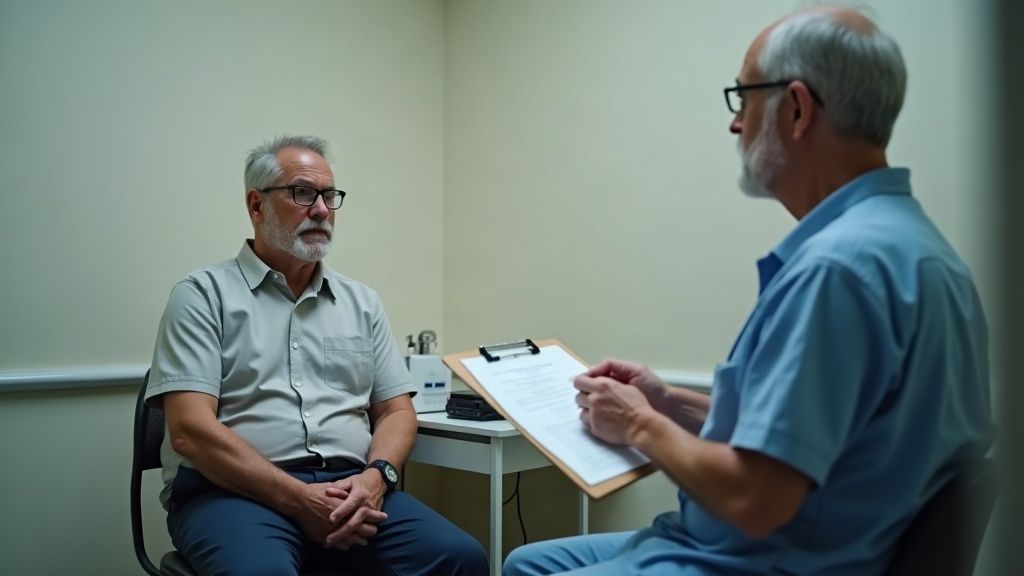
If you have a personal injury or workers' compensation claim in California and the other side's insurance carrier has requested a medical exam, you are not alone in feeling uneasy about it. The exam sounds clinical and neutral. It is not. Here is what is actually happening, what your rights are, and how to make sure the exam does not quietly derail your case.
Quick-Answer Summary
- A "defense medical exam" or "DME" is conducted by a doctor hired by the opposing party's insurer, not a neutral party.
- In California personal injury cases, Cal. Code Civ. Proc. §2032.020 generally gives the defendant one examination as a matter of right.
- You have the right to audio-record the exam under Cal. Code Civ. Proc. §2032.530.
- The exam is typically brief, focused on undermining the scope of your injuries, and used to build the insurer's case at negotiation or trial.
- Your own treating physician's records and a retained medical expert are your best counter-weights.
- Call (818) 794-9947 before the exam, not after.
What a Defense (or "Independent") Medical Exam Actually Is
In California personal injury cases, the defense medical exam is conducted by a doctor chosen and paid by the insurance company or the defendant, not by an independent party.
The term "independent medical examination" or "IME" is a misnomer that has become so common it is essentially standard terminology. In California litigation, the more accurate phrase is defense medical exam (DME), and the distinction matters. The physician performing the exam was retained by the defendant or the defendant's insurer. That physician typically has an ongoing professional relationship with the retaining insurer, and a portion of their income may come from performing these exams regularly.
That does not mean the physician will lie. Most DME doctors are licensed, credentialed physicians. What it does mean is that the exam exists to serve the defense's evidentiary needs, not to diagnose or treat you. The doctor will write a report, and that report will be shared with defense counsel and the insurance adjuster before it ever reaches you or your attorney.
Understanding that dynamic is the first and most important piece of preparation.
Why the Insurer Schedules It and Who the Doctor Works For
Insurance carriers schedule defense medical exams for one primary reason: to obtain a medical opinion that limits their exposure. If your treating physician says your injury is severe and permanent, the insurer wants a second opinion that says it is mild or resolving. That opinion becomes a tool at the negotiation table, and if the case goes to trial, that physician may testify as a defense expert.
The insurer also uses the exam as a fact-gathering opportunity. The doctor will ask about your medical history, prior injuries, and daily activities. Anything you say during the exam can appear in the report and, eventually, in court documents.
This is not a conspiracy. It is simply the adversarial structure of civil litigation in California, and knowing it prepares you to navigate it properly.
When Is a Defense Medical Exam Required?
Under California Code of Civil Procedure §2032.020, a defendant in a personal injury case is generally entitled to one physical examination of the plaintiff as a matter of right.
Cal. Code Civ. Proc. §2032.020 sets out the baseline rule: in any action in which a plaintiff's physical or mental condition is in controversy, the defendant is entitled to one examination as of right, without a court order, as long as proper notice is provided.
A few key points about that statute:
- One exam as of right. The defendant gets one examination without needing court approval. A second exam requires either a stipulation by the parties or a court order showing good cause.
- Proper notice required. The demand must be made in writing and must specify the time, place, manner, conditions, scope, and nature of the examination, as well as the physician's name and specialty. See Cal. Code Civ. Proc. §2032.220.
- You must attend if properly noticed. Failing to appear can expose you to sanctions and can harm your case. If you believe the demand is improper, the way to challenge it is through a protective order, not by simply not showing up.
In California workers' compensation cases, the process is different. There, the relevant mechanism is the QME (qualified medical evaluator) process administered by the DWC, governed by Cal. Lab. Code §4060 and related sections. If your claim is a workers' comp claim rather than a civil personal injury lawsuit, talk to your attorney about which process applies.
What the Exam Covers and How Long It Takes
Most defense medical exams are shorter than injured workers and plaintiffs expect. A DME for a soft-tissue injury may last 15 to 30 minutes. An exam for a more complex orthopedic or neurological injury may take longer, but a multi-hour evaluation is uncommon.
The typical exam includes:
- A review of your medical history (the physician will have reviewed your records in advance)
- Questions about how the injury happened, your symptoms, and how your condition has changed over time
- A physical examination, which may include range-of-motion testing, palpation, reflex testing, and strength assessments
- Questions about your daily activities, work limitations, and functional capacity
The doctor will not treat you. They will not prescribe medication, recommend surgery, or give you a copy of the report at the end of the appointment. You will receive no treatment recommendations from this exam.
How to Prepare and What to Keep in Mind During the Exam
Preparation is the most direct thing you can do to protect yourself. Here is what that looks like in practice.
Before the exam:
- Tell your attorney the moment you receive the notice. Your attorney needs to review the demand for any procedural deficiencies, confirm the physician's specialty is appropriate, and advise you on your specific rights given the case's posture.
- Review your own medical records. You should be able to state, clearly and consistently, when the injury happened, where your pain is located, what makes it better or worse, and how it affects your daily life.
- Do not prepare a script. Preparing talking points is legitimate. Rehearsing testimony is not.
During the exam:
You must answer the exam physician's questions honestly, but you are not required to guess or speculate, and you should stick to your actual symptoms without minimizing or exaggerating them.
- Be truthful. Consistency between what you say during the exam and what is documented in your medical records is one of the most powerful things working in your favor. Any inconsistency, even an innocent one, can become a credibility issue in your case.
- Be precise, not dramatic. Describe your actual symptoms at their actual severity. Do not downplay pain to seem stoic, and do not exaggerate to make sure the doctor "understands." Both errors can hurt you.
- Do not speculate. If the doctor asks what percentage of your pain is from this accident versus prior conditions, it is appropriate to say you do not know and that is a question for your treating physician.
- Do not volunteer information. Answer what is asked. Full, honest answers to the question asked, nothing more.
- Avoid extended social conversation. The exam starts when you walk in the door. Casual comments about your hobbies, weekend activities, or how well you are feeling can and do appear in DME reports.
What not to do:
- Do not cancel without speaking to your attorney first. A missed exam can create procedural problems.
- Do not bring documents to hand over unless your attorney has specifically told you to.
- Do not record the exam without confirming your rights apply in your specific case. See the rights section below.
Your Rights, Including Audio Recording and Observers
California law gives you the right to audio-record a defense medical exam under Code of Civil Procedure §2032.530.
Cal. Code Civ. Proc. §2032.530 states that the plaintiff may audio-record the examination. This is a unilateral right, meaning you do not need the defendant's permission to record. You should inform the examining physician that you intend to record, but you do not need their consent under this statute.
That recording can be valuable. If the DME report later mischaracterizes your statements or the scope of the examination, the recording provides a contemporaneous record of what actually happened.
Regarding observers: The statute also addresses whether an attorney or representative may attend. Cal. Code Civ. Proc. §2032.530 permits an attorney to be present at a DME only if ordered by the court. In practice, whether an observer is permitted often depends on the specific circumstances of the case and may be the subject of a motion. Your attorney can advise you on whether seeking a court order for observer access makes sense given your facts.
Other rights to know:
- You are entitled to a copy of the DME report. Under Cal. Code Civ. Proc. §2032.610, the defendant must provide the report to the plaintiff's attorney upon demand, in exchange for the plaintiff's own medical records and reports.
- The examination must be conducted by a licensed physician, and the specialty must be relevant to the injury at issue. A knee injury does not require a psychiatric examination.
- If the demand is procedurally defective, your attorney may be able to challenge it.
How the Exam Report Is Used and How It Can Be Countered
A defense medical exam report is not the final word on your injuries, because your treating physician's records and a retained medical expert can both be used to challenge its conclusions.
Once the exam is complete, the DME physician writes a report that typically addresses:
- The cause of the injury (including whether a prior condition may be a contributing factor)
- The nature and extent of the injuries
- The expected duration of symptoms and recovery
- Whether the claimed limitations are consistent with the clinical findings
That report will often reach more conservative conclusions than your treating physician's records. That is its purpose. Here is how it gets countered:
Your treating physician's records are the foundation. A consistent treatment history, beginning shortly after the injury and continuing through the time of the exam, is the single most important evidence in your case. Notes documenting your pain levels, functional limitations, and responses to treatment, made in real time, carry substantial weight against a one-time examination conducted months later.
A retained plaintiff's expert can respond directly. Your attorney may retain a medical expert who reviews the same records the DME physician reviewed and provides an opposing opinion. When two physicians reach opposite conclusions on the same record, the jury or adjuster weighs the credibility and reasoning of both.
Inconsistencies in the DME report can be exposed. If the DME physician conducted only a brief examination, failed to review certain records, or did not ask about certain symptoms, those gaps are fair territory for cross-examination at deposition and trial.
Your own recorded behavior matters. If you told the DME physician your shoulder prevents you from lifting overhead, and your treatment records consistently document that limitation, the DME report cannot credibly say otherwise.
This is why preparation and consistency across your entire case, from the first medical visit through the DME itself, matter far more than any single exam.
How Nordanyan Law Handles Defense Medical Exams
We prepare every client before a defense medical exam the way we prepare them for deposition: specifically, honestly, and with the actual facts of the case. We review the demand for procedural deficiencies. We confirm the examining physician's specialty is appropriate. We advise on whether seeking observer access or a protective order is warranted. And after the exam, we review the report line by line and identify every point of contradiction with your treating physician's records.
We handle personal injury and workers' compensation cases across Southern California, and we have seen DME reports that were fair summaries and DME reports that bore little relationship to the examination that actually took place. Knowing how to read them, respond to them, and challenge them at the right moment is part of what the work actually requires.
If you have received a notice for a defense medical exam, or if you are already past the exam and wondering what the report says about your case, call (818) 794-9947. The consultation is free. No fee unless we win.
Frequently Asked Questions
What is a defense medical exam?
A defense medical exam (DME) is a medical examination of an injured plaintiff or claimant, performed by a physician retained and paid by the opposing party's insurance carrier or attorney. Despite sometimes being called an "independent" medical examination, the physician is not independent. They are hired by the defense side to evaluate the nature and extent of the claimed injuries and to produce a report that can be used in negotiations or at trial.
Do I have to attend a defense medical exam in California?
In most California personal injury cases, yes. Cal. Code Civ. Proc. §2032.020 gives the defendant one examination as a matter of right once proper written notice is provided. Failing to attend without a valid legal basis can result in sanctions and can seriously damage your case. If you believe the demand is improper, the correct response is to raise that objection through your attorney, not to simply skip the exam.
Is the IME doctor really independent?
No, not in the everyday sense of the word. The examining physician is chosen and paid by the insurance company or defense counsel. Many DME physicians perform these evaluations regularly for the same insurers, which creates at minimum a financial relationship with the retaining side. That does not mean the physician will be dishonest, but it does mean they are not a neutral third party, and you should prepare accordingly.
What should I say during a defense medical exam?
Be truthful, precise, and consistent with your medical records. Answer the questions asked without volunteering extra information. Describe your actual symptoms at their actual level, without exaggerating or downplaying. Do not speculate about causation, percentages, or prognosis. If you do not know the answer to something, say so. Inconsistencies between what you say during the exam and what is documented in your treatment records are the most common way a DME report is used against a plaintiff.
Can I record a defense medical exam in California?
Yes. Cal. Code Civ. Proc. §2032.530 gives the plaintiff the right to audio-record the examination. You should inform the examining physician that you are recording, but you do not need their consent under this statute. The recording can be valuable if the DME report later mischaracterizes what was said or done during the exam.
Can I bring someone with me to the defense medical exam?
This depends on the specific circumstances of your case. Under Cal. Code Civ. Proc. §2032.530, an attorney may be present at a DME only if ordered by the court. Whether a non-attorney observer may attend can also be subject to dispute. Your attorney should advise you on whether seeking a court order for observer access is appropriate in your case.
What happens after the defense medical exam?
The examining physician writes a report covering the cause, nature, extent, and expected duration of your injuries. That report is provided to defense counsel and the insurance carrier. Under Cal. Code Civ. Proc. §2032.610, your attorney can demand a copy of the report in exchange for your own medical records and reports. Your attorney will then review the report, compare it with your treating physician's records, and advise on whether a responding expert is needed.
How is the DME different from a QME in workers' compensation cases?
In California civil personal injury cases, the examination is governed by the Code of Civil Procedure and is typically called a DME or IME. In California workers' compensation cases, disputed medical issues are addressed through the QME (qualified medical evaluator) process administered by the DWC under Cal. Lab. Code §4060 and related sections. The QME process involves a panel of evaluators selected in a specific way, and the rules governing it are different from the civil litigation process. If you are unsure which process applies to your claim, your attorney can clarify.
Can the DME report be used to deny or reduce my settlement?
Yes. The DME report is admissible evidence that the defense will use at the negotiation table and, if necessary, at trial. A DME that concludes your injuries are minor, pre-existing, or exaggerated gives the insurance adjuster a basis to offer a lower settlement. It can also be used to limit the scope of expert testimony presented on the defense side. This is why how you conduct yourself during the exam and the consistency of your overall medical record both matter so much.
What if the DME report is wrong or unfair?
A report you believe is inaccurate or misleading can be challenged in several ways. Your treating physician can provide a responding declaration or report. Your attorney can retain a plaintiff's medical expert to review the same records and provide an alternative opinion. At deposition and trial, defense counsel can be cross-examined about the examining physician's methodology, the brevity of the exam, records not reviewed, and the physician's financial relationship with the retaining insurer. If you recorded the exam and the report mischaracterizes what happened, the recording becomes direct evidence.
Reviewed by Minas Nordanyan, CA Bar #296806. For questions about a specific personal injury or workers' compensation claim in California, call (818) 794-9947 for a free consultation. No fee unless we win.