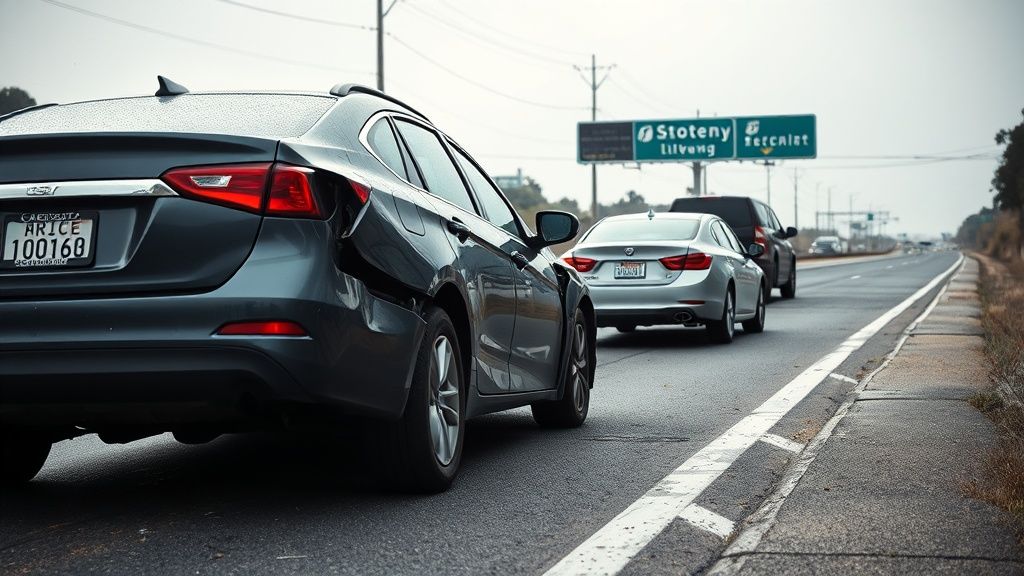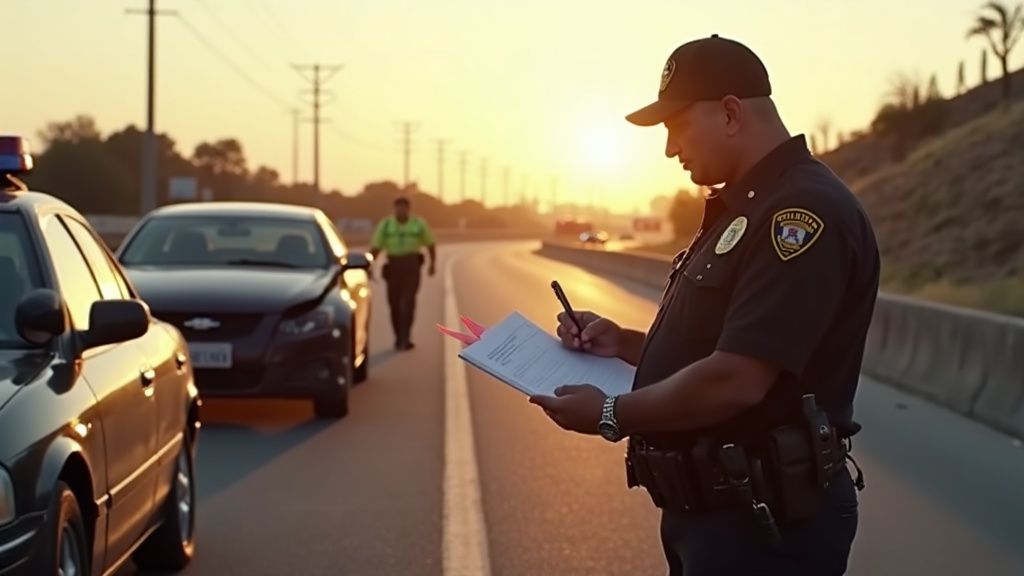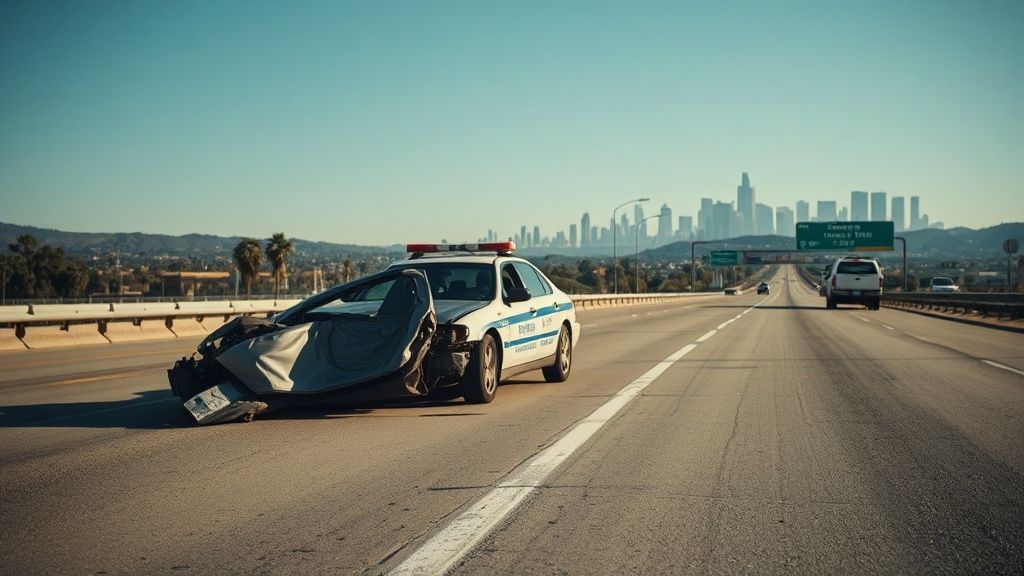
If you've been hurt in a car crash in California, the decisions you make in the first hours and days after the collision can determine whether you recover maximum compensation — or walk away with far less than you deserve.
Insurance adjusters count on injured drivers making these mistakes. Every one of the nine errors below gives them a legitimate reason to reduce, delay, or flat-out deny your claim.
We've recovered over $150,000,000 for injured Californians. Here's what we see go wrong — and how to protect yourself.
At a Glance: 9 Mistakes That Can Wreck Your Claim
- Saying 'I'm sorry' — even casually — can become an admission of fault.
- Skipping or delaying medical care lets insurers argue your injuries aren't real.
- Giving the other insurer a recorded statement hands them ammunition to use against you.
- Accepting the first settlement offer closes your claim before you know your full damages.
- Posting about the crash on social media gives the defense evidence to contradict your injuries.
- Not getting a police report removes your strongest independent record of what happened.
- Failing to photograph the scene lets the insurer control the story.
- Letting your car be repaired too soon destroys physical evidence of the impact.
- Missing the 2-year filing deadline permanently ends your right to sue.
1. Saying 'I'm Sorry' or Admitting Fault at the Scene
Apologizing at the scene of a California car accident — even a casual 'I'm sorry' — can be treated as an admission of fault and used against you by the other driver's insurance company.
Under California Evidence Code §1101, prior statements and conduct can be introduced to show fault. You may genuinely feel bad for what happened — that's a human reaction. But "I'm sorry" is not a harmless social phrase in the context of an insurance claim. An adjuster or opposing attorney will characterize it as an acknowledgment that you caused the crash.
At the scene, do this instead: exchange driver's license, insurance, registration, and contact information. Get the names and numbers of witnesses. Say nothing beyond what the police officer asks you directly.
Takeaway: Stay calm, exchange information, and save every opinion about what happened for your attorney.
2. Skipping Medical Care or Delaying Treatment
Gaps in medical treatment after a car accident give insurers grounds to argue your injuries were not caused by the crash — see a doctor within 24 to 72 hours, even if you feel fine.
Soft-tissue injuries — whiplash, lumbar strains, cervical sprains — frequently don't produce full symptoms until 24-72 hours after a collision. Adrenaline masks pain at the scene. Many injured drivers go home thinking they're fine, then wake up the next morning unable to turn their necks.
If there's a gap between the crash and your first medical visit, the insurer's adjuster will point to that gap and argue: (a) your injuries aren't serious, or (b) something else caused them after the crash. Both arguments cut your damages significantly.
California courts have consistently allowed insurers to use treatment gaps as evidence against damages claims. Your medical records are your proof of causation — and that chain of causation starts the day of the crash.
Takeaway: See a doctor within 24-72 hours of the collision, follow every treatment recommendation, and never skip scheduled appointments.
3. Giving the Other Insurer a Recorded Statement
California law does not require you to give a recorded statement to the other driver's insurance company, and doing so without an attorney can seriously damage your claim.
The other driver's insurance company is not your insurance company. They represent the adverse party. When their adjuster calls — and they call fast, sometimes within hours of the crash — they will sound friendly and helpful. They will tell you this is a "routine" recorded statement and that it will "speed up the process."
It is not routine. It is a tool.
Adjusters are trained to ask open-ended questions that produce inconsistencies. "Describe how you felt immediately after the crash" is designed to get you to say something like "a little sore but okay" — a statement they will use months later when your MRI shows a herniated disc.
You have no legal obligation under California law to provide a recorded statement to the other party's insurer. You are required to cooperate with your own insurer under your policy terms — but that's a different obligation entirely.
Takeaway: Politely decline any recorded statement request from the other driver's insurer, and speak with an attorney before giving any statement.
4. Accepting the First Lowball Settlement Offer
Insurance companies routinely make first settlement offers before you know the full extent of your injuries; once you sign a release, you cannot reopen the claim under California law.
First settlement offers serve one purpose: to close your claim cheaply, before you or an attorney has had time to evaluate your full damages. They arrive fast — sometimes within days of the crash — because that's when you're most vulnerable: in pain, worried about bills, unclear on what your case is worth.
Once you sign a release, that's it. California courts enforce those releases. You cannot reopen the claim because your surgery costs turned out to be higher than estimated, or because you developed chronic pain six months later.
Full damages in a California car accident claim include: past and future medical expenses, lost wages and lost earning capacity, pain and suffering under California Civil Code §3333, property damage, and in some cases, punitive damages. A first offer almost never accounts for future costs.
Takeaway: Never accept or sign any settlement offer without first consulting an attorney who can calculate your full damages — including future medical care.
5. Posting About the Crash on Social Media
Anything you post publicly — photos, check-ins, comments about your health — can be obtained by the defense and used to contradict your injury claims, so stay off social media until your claim is resolved.
Defense investigators and insurance carriers routinely monitor the social media profiles of claimants. A photo of you at a friend's birthday party, a check-in at a hiking trail, or even a comment saying you're "feeling better" can be presented to a jury or adjuster as evidence that your injuries were exaggerated.
This isn't hypothetical. Courts across California have allowed social media evidence in personal injury cases. Even posts from friends tagging you can be discoverable.
The safest rule: do not post anything about the crash, your injuries, your medical appointments, your mood, or your physical activities until your claim is fully resolved. Ask family members not to post about you either.
Takeaway: Lock down your social media profiles immediately after a crash and don't post anything until your claim is closed.
6. Not Getting a Police Report
Under California Vehicle Code §20008, drivers involved in a crash that causes injury or death must report it to law enforcement — that police report is an independent record of fault that strengthens your claim.
California Vehicle Code §20008 requires the driver of any vehicle involved in an accident resulting in injury or death to immediately report the crash to the California Highway Patrol (CHP) or the local police department. Beyond the legal obligation, a police report is one of the most valuable pieces of evidence you will have.
The report documents: the officer's on-scene assessment of fault, the other driver's statement, vehicle positions, traffic conditions, witness names, and whether any citations were issued. Insurance adjusters and juries both give significant weight to police reports as neutral third-party accounts.
If police are not dispatched to your scene — which sometimes happens in lower-speed crashes — file a report yourself. You can file a collision report with the California Highway Patrol or your local police department, and you must also file a Report of Traffic Accident Occurring in California (SR-1) with the California DMV within 10 days if anyone was injured or killed, or if property damage exceeds $1,000.
Takeaway: Always call 911 after a crash involving injury — and if police don't respond, file your own report with the CHP and DMV.
7. Failing to Photograph the Scene and Damage
Photographs of vehicle damage, skid marks, traffic signals, road conditions, and visible injuries create evidence that cannot be recreated later — without them, the insurer controls the narrative.
Your smartphone is your most powerful tool in the first minutes after a crash. Take photographs before vehicles are moved if it is safe to do so. Capture every angle of vehicle damage, the point of impact, the road surface, any skid marks, the positions of traffic signals or stop signs, and any visible injuries on your body.
Physical evidence disappears fast. Vehicles get towed and repaired. Roads get resurfaced. Skid marks fade. Witnesses leave. The only way to preserve the scene is with photographs taken at the scene.
Under California Evidence Code §250, photographs are admissible as documentary evidence. A clear photo of the other driver's rear-ended bumper folding into your front end is worth far more than your verbal description of the same impact weeks later in a deposition.
Takeaway: Photograph everything — damage, road conditions, injuries, license plates, insurance cards — before you leave the scene.
8. Letting Your Car Be Repaired Before It Is Documented
Once your vehicle is repaired, critical physical evidence of the impact — crush depth, airbag deployment, point of impact — disappears permanently and cannot be used to support your injury claim.
This matters more than most people realize. In high-stakes injury claims, defense experts use vehicle damage data to argue that the collision wasn't severe enough to cause the injuries claimed. They obtain repair estimates, accident reconstruction reports, and photographs of the damage to build that argument.
If your vehicle has already been repaired, you lose the ability to counter that argument with physical evidence. Have the vehicle professionally inspected and photographed before authorizing any body work — even if the insurer is pressuring you to move quickly on the repair.
Request a copy of every repair estimate and every repair record. If airbags deployed, the airbag control module (ACM) may contain data about speed, braking, and impact — that data should be preserved before the module is replaced.
Takeaway: Do not authorize repairs until the damage has been photographed and, in serious injury cases, inspected by a qualified expert.
9. Missing the 2-Year Filing Deadline
Under California Code of Civil Procedure §335.1, you have two years from the date of a car accident to file a personal injury lawsuit — miss that deadline and you permanently lose the right to sue.
Two years sounds like plenty of time. It disappears fast. Medical treatment takes months. Negotiations drag. And then suddenly you're at 22 months and the insurance company still hasn't made a fair offer — and you have no choice but to file suit or lose everything.
California Code of Civil Procedure §335.1 is absolute. California courts have dismissed cases filed one day late. There are narrow exceptions — for minors (the clock starts at age 18), for cases where the defendant left California after the crash, or for late-discovered injuries in some circumstances — but you cannot count on an exception applying to your facts.
If a government entity (city, county, state) owned a vehicle involved in the crash or was responsible for a road defect that caused it, you face a much shorter window: you must file a government tort claim under the California Government Claims Act within 6 months of the incident before you can file suit.
Takeaway: Start the clock in your head from the day of the crash — and consult an attorney well before the two-year mark, not at it.
What to Do Instead: Your First 72 Hours
Most of the mistakes above share a common cause: not knowing what the correct move is in the immediate aftermath of the crash. Here's the short version:
- Call 911. Get law enforcement and emergency medical services to the scene.
- Get medical attention the same day. Even an urgent-care visit creates a dated medical record.
- Photograph everything before vehicles move, if safe.
- Exchange information — driver's license, insurance, registration, contact details.
- Collect witness contact information.
- Say nothing beyond factual answers to the responding officer. Do not apologize, speculate, or give opinions about fault.
- Call your own insurer to report the crash — this is required under virtually every California auto policy.
- Do not call the other driver's insurer without consulting an attorney first.
- Stay off social media.
- Call a California personal injury attorney before the adjuster calls you.
We Fight for Injured Californians. No Fee Unless We Win.
Every year, injured drivers leave money on the table because they made one of these nine mistakes before they had an attorney in their corner. Insurance companies are counting on that.
We've recovered over $150,000,000 for injured Californians — from car accidents, workplace injuries, and beyond. Every case is handled as if it's going to trial, because that's what makes insurance carriers take the claim seriously.
If you've been in a car accident in California, request a free case evaluation or call (818) 794-9947 today. The consultation is free. We don't collect a fee unless we win.
Frequently Asked Questions
What should you not do after a car accident in California?
Do not apologize or admit fault at the scene, skip medical treatment, give a recorded statement to the other driver's insurer, accept the first settlement offer without consulting an attorney, or post about the crash on social media. Each of these actions can be used to reduce or deny your claim.
Should I talk to the other driver's insurance company after an accident?
You are not legally required to give a recorded statement to the other driver's insurance company under California law. Politely decline any recorded statement request and consult an attorney before giving any statement to the adverse insurer. You are required to cooperate with your own insurer under your policy — that is a separate obligation.
Why shouldn't I accept the first settlement offer from an insurance company?
First offers are designed to close your claim before you know the full extent of your injuries, future medical costs, or lost wages. Under California law, once you sign a release, you cannot reopen the claim. A first offer rarely accounts for future treatment, lost earning capacity, or pain and suffering damages under California Civil Code §3333.
How long do I have to file a car accident claim in California?
Under California Code of Civil Procedure §335.1, you have two years from the date of the collision to file a personal injury lawsuit. If a government entity is involved, you must file a government tort claim within 6 months under the California Government Claims Act.
Do I need a police report for a car accident claim in California?
Yes. California Vehicle Code §20008 requires you to report crashes involving injury or death to law enforcement. A police report is an independent third-party record of the crash that supports your claim and is taken seriously by insurers and courts. If police are not dispatched, file your own report with the CHP and file an SR-1 form with the California DMV within 10 days.
Can social media posts hurt my car accident claim in California?
Yes. California courts have allowed social media evidence — photos, check-ins, status updates — in personal injury cases. Defense investigators routinely monitor claimants' profiles. Any post that appears to show physical activity inconsistent with your claimed injuries can be used to reduce your damages. Stay off social media until your claim is fully resolved.
What if I didn't go to the doctor right away after my accident?
A gap in medical treatment gives the insurer grounds to argue your injuries weren't caused by the crash or aren't as serious as claimed. If you delayed treatment, see a doctor immediately — the sooner you establish a medical record, the stronger your claim. An attorney can help you explain the gap in context rather than letting the insurer use it against you without a response.
Does California follow comparative fault rules for car accidents?
Yes. California follows a pure comparative fault rule under California Civil Code §1714. Even if you were partially at fault for the crash, you can still recover damages — they are simply reduced by your percentage of fault. This makes admissions of fault at the scene especially consequential, because they directly increase your assigned fault percentage.
Reviewed by Minas Nordanyan, CA Bar #296806. Last updated June 2026.