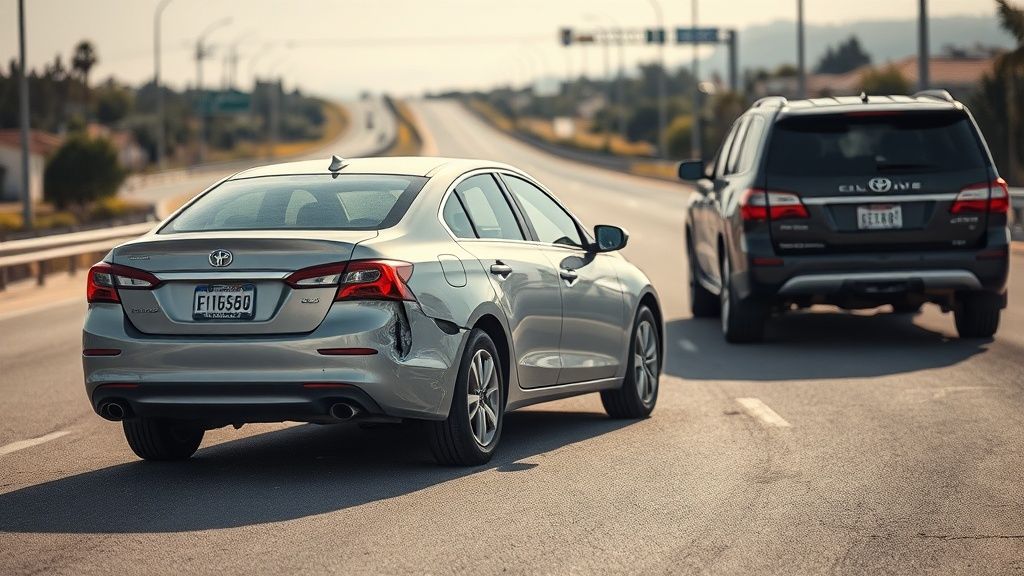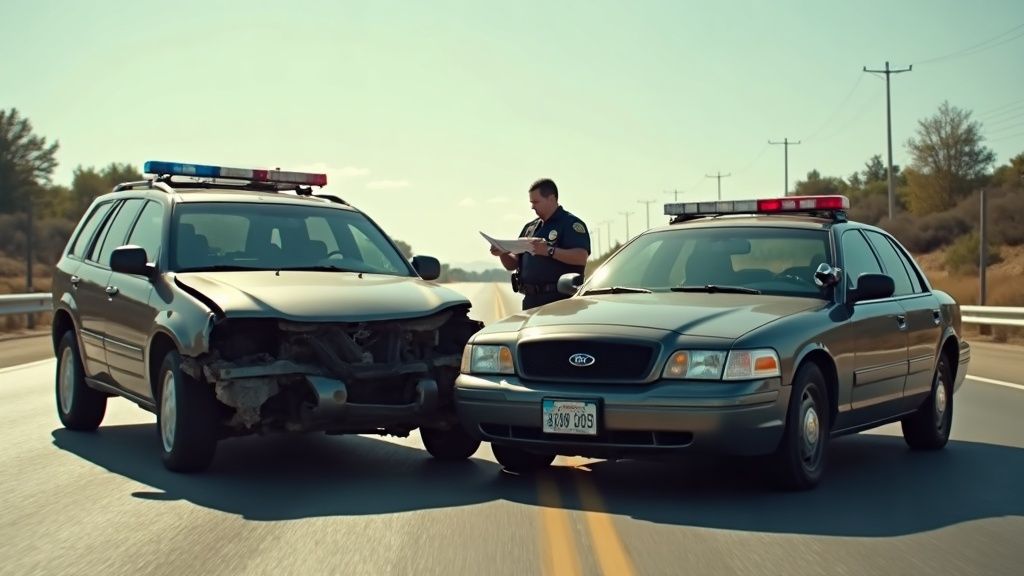
If you have been in a head-on collision in California, you already know the impact felt unlike anything else. Two vehicles moving toward each other concentrate every pound of force into the same fraction of a second. The human body is not built for that. The injuries that follow are among the most severe, most expensive, and most legally complex cases we handle at Nordanyan Law.
We've recovered over $150,000,000 for injured Californians. The seven injuries below are the ones we see most often in head-on collision cases, and the ones that matter most when building a claim for maximum compensation.
Here is what this article covers:
- Traumatic brain injuries from violent deceleration
- Spinal cord injuries and paralysis
- Broken bones and crush injuries
- Internal organ damage and hidden bleeding
- Facial and dental trauma
- Chest and rib injuries from the seatbelt and airbag
- Long-term psychological trauma, including PTSD
1. Traumatic Brain Injuries
Traumatic brain injury is one of the most serious outcomes of a California head-on collision, and symptoms can surface hours or even days after the crash.
A head-on crash throws your body forward at the speed your car was traveling, then stops it almost instantly. The brain, which floats in cerebrospinal fluid inside the skull, keeps moving after your skull stops. It slams into the interior of the skull wall. Depending on the speed and angle, the result can range from a concussion to a severe diffuse axonal injury, where the brain's internal wiring is torn at a microscopic level.
TBI is one of the most commonly underestimated crash injuries because symptoms are not always visible or immediate. Headache, confusion, memory gaps, mood changes, and sensitivity to light are all warning signs. A victim who walks away from a crash and declines emergency transport can deteriorate significantly within 24 to 48 hours.
California courts recognize TBI as a basis for both economic damages (future medical care, lost earnings capacity) and non-economic damages (pain and suffering, loss of enjoyment of life). In severe cases, lifetime care costs run into the millions of dollars, and expert neuropsychological testimony is standard in litigation.
Practical takeaway: Go to the emergency room after any head-on collision, even if you feel fine. Declining transport is one of the most common mistakes that later undermines a damage claim.
2. Spinal Cord Injuries and Paralysis
Spinal cord injuries from head-on crashes can cause permanent paralysis; cervical injuries above the C4 level can impair a person's ability to breathe on their own.
The spine is strong in normal loading, but a head-on collision generates forces far outside the spine's design limits. The neck hyperflexes forward and then snaps back, or the torso compresses downward into the lumbar spine. Either sequence can fracture vertebrae. When bone fragments or displaced discs compress or sever the spinal cord, the result is partial or complete paralysis below the injury level.
Cervical (neck) injuries carry the highest stakes. A fracture at or above the C4 level can eliminate the nerve signals that control breathing, placing the patient on mechanical ventilation, sometimes for life. Thoracic and lumbar injuries typically produce paraplegia. Any level of spinal cord injury requires emergency surgical evaluation.
Under Cal. Civ. Code §3333, a plaintiff is entitled to recover the full measure of damages proximately caused by a defendant's negligence. For complete spinal cord injury, that measure routinely includes lifetime attendant care, adaptive equipment, modified housing, lost wages, and non-economic damages for a life permanently altered.
Practical takeaway: Do not move a crash victim who may have a spinal injury. Wait for paramedics with spinal immobilization equipment.
3. Broken Bones and Crush Injuries
When a head-on crash crumples the front of both vehicles, metal intrudes into the passenger compartment. Legs, feet, and hands are most exposed. The result is not a single clean fracture; it is multiple bones shattered at once, often with soft-tissue destruction and vascular damage in the same limb.
Crush injuries carry a specific medical emergency beyond the fractures themselves: compartment syndrome. When severe swelling is contained within the dense fibrous tissue that wraps muscle groups, pressure inside that compartment can cut off blood flow to the muscle. If not surgically relieved within hours through a procedure called a fasciotomy, the muscle dies. Permanent loss of limb function, or amputation, can follow.
Femur fractures (the thigh bone, the largest bone in the body) are particularly common in frontal crashes and require surgical fixation. Recovery takes months, and many patients require physical therapy for a year or more before reaching their maximum medical improvement.
Economic damages in crush injury cases frequently include multiple surgeries, hospitalization, post-acute rehabilitation, and significant future medical monitoring. When a limb is lost or permanently impaired, vocational rehabilitation costs and lost earning capacity form a major component of the damage calculation.
Practical takeaway: If a leg or arm was pinned in the wreck, tell the emergency team immediately. Compartment syndrome is a surgical emergency with a narrow treatment window.
4. Internal Organ Damage
Internal organ bleeding after a head-on crash produces no visible wound, which is why emergency physicians order imaging even when a patient appears outwardly stable.
The steering wheel, dashboard, and seatbelt all press hard into the abdomen and chest during a high-speed frontal impact. That blunt force is transmitted to the organs behind the abdominal wall. The spleen, which sits just under the left rib cage, is the most frequently injured solid abdominal organ in motor vehicle crashes. The liver, kidneys, and mesentery (the tissue anchoring the intestines) are also vulnerable.
What makes internal organ injuries so dangerous is what you cannot see. There is no bleeding wound on the skin. A victim may walk away from the crash scene feeling shaken but not critically hurt, then lose a life-threatening volume of blood internally over the next hour. The classic signs of internal bleeding, including worsening abdominal pain, a rigid abdomen, dizziness, and a dropping blood pressure, appear only after significant blood loss has already occurred.
Emergency CT imaging of the abdomen and pelvis is the standard diagnostic tool. When an organ laceration is confirmed, treatment ranges from non-operative monitoring in stable patients to emergency surgery and, in some cases, removal of a ruptured spleen (splenectomy).
Practical takeaway: Accept transport to the ER. Tell the treating physician you were in a high-speed head-on crash and describe any abdominal pain, even mild discomfort. That history triggers the imaging that catches internal bleeding before it becomes fatal.
5. Facial and Dental Trauma
Head-on crashes bring the driver's face very close to the steering wheel, airbag, and windshield almost simultaneously. Airbags deploy in roughly 30 milliseconds, faster than a human blink, and the deployment force is substantial. Windshield glass, even laminated safety glass, can produce lacerations at high speeds.
The bones of the face are relatively thin and fracture under far less force than the long bones of the limbs. Orbital fractures (the bones surrounding the eye socket), nasal fractures, zygoma (cheekbone) fractures, and mandible (jaw) fractures are all well-documented outcomes of frontal vehicle crashes. When the jaw fractures, teeth can be knocked out, shattered, or driven into the gum tissue.
Reconstructive facial surgery is highly specialized and expensive. Orbital floor fractures often require titanium mesh implants to prevent permanent double vision. Jaw fractures may require surgical fixation and weeks of jaw immobilization. Dental reconstruction, including implants for lost teeth, can cost thousands of dollars per tooth and is not always covered by standard health insurance.
These costs are fully recoverable as economic damages in a California personal injury claim. Scarring and disfigurement from facial lacerations also support claims for non-economic damages, including permanent disfigurement under Cal. Civ. Code §3333.2 in cases involving medical malpractice, or the general tort measure of non-economic damages in standard negligence cases.
Practical takeaway: Document every facial injury with photographs at the scene and at every medical appointment. Disfigurement claims require a visual record.
6. Chest and Rib Injuries from the Seatbelt and Airbag
The devices engineered to save your life in a head-on collision, the seatbelt and the airbag, also transfer enormous force into your chest wall. That is a fair trade when the alternative is flying through the windshield. But the medical consequences of that force are real and require prompt attention.
The seatbelt restrains your forward motion by pressing across your chest and lap. At high deceleration, that load can fracture ribs. Even a single fractured rib is painful enough to make breathing difficult; multiple fractured ribs (a flail chest) can cause the chest wall to move paradoxically with each breath, compromising ventilation. Rib fractures also create a direct injury risk to the organs beneath them. A fractured rib can puncture the lung and cause a pneumothorax (collapsed lung), which requires emergency chest tube placement.
Airbag deployment, while life-saving, strikes the driver and front passenger at high speed. Sternal fractures (the breastbone), cardiac contusion (bruising of the heart muscle itself), and aortic injury are all documented airbag-related injuries in high-speed crashes. Cardiac contusion can cause arrhythmias that appear hours after the crash, which is why chest-trauma patients are typically monitored on a cardiac telemetry unit.
Practical takeaway: Chest pain, shortness of breath, or an irregular heartbeat after a head-on crash are red flags. Do not drive yourself to urgent care. Call 911.
7. Long-Term Psychological Trauma
Post-traumatic stress disorder and other psychological injuries are compensable under California personal injury law and can significantly increase the value of a damage claim.
Surviving a head-on collision does not end when the physical wounds heal. The human brain encodes life-threatening events as traumatic memories that can persist for months or years. Post-traumatic stress disorder (PTSD), major depressive disorder, and generalized anxiety are recognized medical diagnoses that frequently follow severe vehicle crashes. These are not character flaws or exaggerated reactions. They are documented, treatable conditions with measurable impacts on a person's ability to work, maintain relationships, and function in daily life.
PTSD symptoms include intrusive flashbacks, nightmares, hypervigilance, avoidance of driving or any reminder of the crash, and emotional numbing. Major depression after a crash can make it impossible to return to work, even when physical injuries have healed. These functional impairments translate directly into economic damages (lost wages, cost of psychiatric treatment) and non-economic damages (pain and suffering, loss of enjoyment of life).
California law treats psychological injuries the same as physical injuries for purposes of personal injury damages. A plaintiff who develops documented PTSD after a head-on collision caused by a negligent driver can recover the full cost of psychiatric care, lost income attributable to psychological impairment, and non-economic damages for the suffering itself. Expert psychiatric testimony is the standard evidentiary foundation for these claims.
Practical takeaway: Tell your treating physician about any sleep disturbance, anxiety, or avoidance behavior. A medical record linking psychological symptoms to the crash is the foundation of a psychological injury claim.
How California Personal Injury Law Applies to Head-On Collision Injuries
California follows a pure comparative fault rule established by the California Supreme Court in Li v. Yellow Cab Co., 13 Cal.3d 804 (1975). Under that rule, a crash victim can recover compensation even if they were partly responsible for the collision. A court reduces the plaintiff's recovery by their percentage of fault, but does not bar it entirely. A driver who was 20 percent at fault for the crash can still recover 80 percent of their proven damages.
California's statute of limitations for personal injury claims is Cal. Code Civ. Proc. §335.1, which gives an injured person two years from the date of injury to file suit. Missing that deadline extinguishes the right to recover, regardless of how severe the injuries are.
Damages recoverable in a California head-on collision case include:
- Economic damages: medical bills (past and future), lost wages, lost earning capacity, cost of rehabilitation and attendant care, property damage.
- Non-economic damages: pain and suffering, emotional distress, permanent disfigurement, loss of enjoyment of life.
- Punitive damages: available in cases involving malice, oppression, or fraud under Cal. Civ. Code §3294, which can apply when a defendant was driving under the influence.
If you were injured in a head-on crash involving a commercial vehicle, a government employee, or a defective car part, additional rules apply. Claims against a government entity in California require a government tort claim filed within six months of the incident under the California Government Claims Act, Gov. Code §911.2. Missing that six-month window is a separate deadline from the civil statute of limitations, and it is routinely missed by unrepresented victims.
Frequently Asked Questions
What injuries happen in a head-on crash?
Head-on crashes most commonly produce traumatic brain injuries, spinal cord injuries, broken bones, crush injuries to the limbs, internal organ damage, chest and rib injuries, facial fractures, and psychological trauma including PTSD. Because both vehicles are moving toward each other, the forces involved are among the highest in any vehicle collision type, making severe and multiple injuries common.
How serious are head-on collisions?
Head-on collisions are among the most lethal crash types on California roads. The combined closing speed of both vehicles multiplies the force of impact. Even crashes at moderate individual speeds can generate enough force to cause catastrophic injuries. Injuries that would be minor in a low-speed rear-end collision can be permanently disabling or fatal in a head-on crash.
What is a high-impact crash injury?
A high-impact crash injury is one caused by the extreme forces generated in a severe collision. In a head-on crash, high-impact injuries typically include traumatic brain injury, spinal cord injury, aortic damage, solid organ lacerations, and crush injuries. These injuries often require emergency surgery, intensive care, and long-term rehabilitation, and they form the basis for significant personal injury damage claims.
Can I still recover damages if I was partly at fault for a head-on collision in California?
Yes. California follows a pure comparative fault rule from Li v. Yellow Cab Co., 13 Cal.3d 804 (1975). Your recovery is reduced by your percentage of fault, but it is not eliminated. If a jury finds you 30 percent at fault and awards $500,000 in damages, you recover $350,000.
What is the deadline to file a personal injury lawsuit after a California car crash?
The standard deadline is two years from the date of the injury under Cal. Code Civ. Proc. §335.1. If the at-fault driver was a government employee acting in the scope of their duties, you must file a government tort claim within six months of the incident under Gov. Code §911.2. Missing either deadline can permanently bar your claim.
Are psychological injuries compensable after a head-on collision in California?
Yes. PTSD, depression, and anxiety caused by a crash are recognized compensable injuries under California personal injury law. They support both economic damages (cost of psychiatric treatment, lost wages) and non-economic damages (pain and suffering, loss of enjoyment of life). Expert psychiatric testimony is typically needed to establish causation and severity.
How does an attorney calculate damages for a catastrophic head-on collision injury?
In a catastrophic case involving TBI, spinal cord injury, or crush injury, an attorney builds a damage model that includes current and future medical costs (with life-care plan testimony from a qualified planner), lost earning capacity projected over the plaintiff's remaining work-life expectancy, and non-economic damages calibrated to the severity and permanence of the injury. Economists and vocational rehabilitation experts often testify as to the economic figures.
Head-on collision injuries change lives. Medical bills arrive before you can return to work. The insurance adjuster's first call often comes before you leave the hospital. That call is not courtesy; it is an attempt to resolve the claim at a fraction of its value before you know what your injuries will ultimately cost.
We've recovered over $150,000,000 for injured Californians, and we handle every case as if it were going to trial, because insurance carriers settle for more when they know we're prepared to go the distance. No fee unless we win.
Call (818) 794-9947 for a free case review. We come to you if you can't travel.