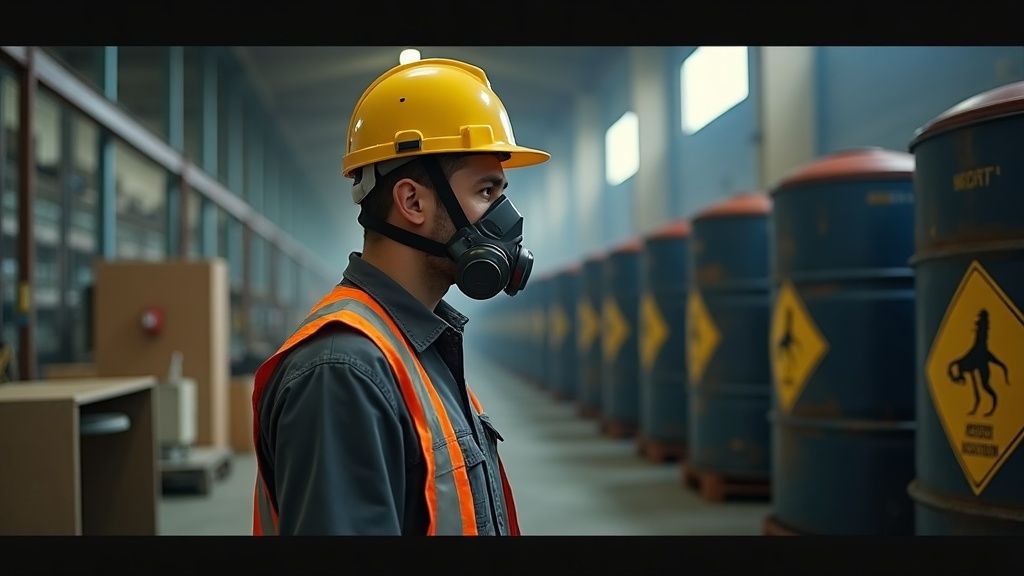
Toxic Chemical Exposure on the Job in California: Your Workers' Comp Rights
If you've been exposed to toxic chemicals at work in California, you have the right to workers' compensation benefits, and a 30-day deadline to protect those rights that most people miss.
Chemical exposure injuries are different from a broken bone or a back strain. The symptoms can be subtle at first. The connection to work may not be obvious right away. And by the time a doctor confirms that your lungs, skin, or nervous system have been damaged by something at the job site, weeks or months may have already passed.
That gap, between the exposure and the diagnosis, is exactly where insurance carriers look for reasons to deny a claim. Knowing what the California Labor Code says, what evidence you need, and when the clock actually starts running, can be the difference between a full recovery of benefits and walking away with nothing.
We've recovered over $150,000,000 for injured workers across Southern California. Call (818) 794-9947 for a free consultation. No fee unless we win.
Quick Answer: What You Need to Know Right Now
- Toxic chemical exposure at work is a covered injury under California workers' compensation law.
- Your 30-day notice deadline runs from the date you discover the illness is work-related, NOT from the day of exposure.
- The statute of limitations for filing your claim is one year from that same discovery date.
- You may be able to file a personal injury lawsuit against a third party (a chemical maker, for example) on top of your workers' comp claim.
- Medical records, Safety Data Sheets (SDS), and a doctor's written opinion connecting the chemical to your diagnosis are the backbone of your case.
- Do not sign any paperwork from the insurance carrier before speaking with a workers' comp attorney.
How Workplace Chemicals and Fumes Cause Occupational Illness
Toxic chemical exposure on the job comes in many forms. Some of the most common situations we see in Southern California involve:
- Industrial solvents and degreasers in auto shops, manufacturing facilities, and warehouses.
- Pesticides and herbicides affecting farmworkers and landscapers throughout the Central Valley and Inland Empire.
- Lead, asbestos, and silica dust on demolition and renovation job sites.
- Welding fumes containing manganese, chromium, and nickel.
- Cleaning products and disinfectants used by janitorial workers, housekeeping staff, and healthcare workers.
- Chemical off-gassing from new construction materials, paints, adhesives, and coatings.
The body reacts to these exposures in different ways depending on the substance, the duration, and the concentration. Some workers develop acute reactions, a chemical burn, respiratory distress, or loss of consciousness, within minutes of a single exposure. Others develop occupational asthma, kidney disease, neurological damage, or cancer only after years of repeated low-level contact.
Under Cal. Lab. Code §3208, any injury or disease arising out of and in the course of employment is compensable. That definition is intentionally broad. It covers both the warehouse worker who passes out from a solvent leak and the mechanic who develops chronic lung disease after a decade of brake-dust exposure.
In California, any illness or injury caused by workplace chemical exposure is covered under workers' compensation, regardless of how long it takes for symptoms to appear.
Coverage for Both Sudden Exposure and Long-Term Buildup
California workers' comp law draws a distinction between two types of chemical exposure claims, and understanding which one applies to your situation matters.
Specific Injury (Single-Event Exposure)
This is a sudden, identifiable incident: a chemical spill, a gas leak, a one-time contact with a concentrated substance. The injury has a clear date. The employer report form, DWC-1, asks for that date, and the claim process follows the standard workers' comp timeline.
Under Cal. Lab. Code §5405, you have one year from the date of injury to file a claim with the WCAB (Workers' Compensation Appeals Board).
Cumulative Injury (Ongoing or Repeated Exposure)
This is where chemical exposure cases get more complicated. If your illness developed gradually over months or years of repeated exposure, there is no single "date of injury." California law addresses this directly.
Under Cal. Lab. Code §5412, the date of injury for a cumulative occupational disease is the date on which the employee first suffers disability from the disease AND knows, or reasonably should know, that the disability is work-related.
This is critical. Your one-year filing window and your 30-day employer notification window both start from that discovery date, not from the first day you were exposed.
Under Cal. Lab. Code §5412, the statute of limitations for an occupational disease starts on the date the worker first suffers disability and knows, or reasonably should know, that the disability is work-related.
The Challenge of Illnesses That Surface Years Later
Some of the most serious occupational diseases caused by chemical exposure take years or even decades to manifest. Asbestos-related mesothelioma may not appear until 20 to 50 years after exposure. Certain occupational cancers linked to benzene, asbestos, or cadmium can have long latency periods as well.
Insurance carriers often argue that by the time a diagnosis is made, the statute of limitations has expired. That argument is wrong in many cases because of how Cal. Lab. Code §5412 works.
Here is how the rule actually applies:
- You were exposed to a toxic chemical at work over several years.
- You developed symptoms, but a doctor did not yet connect them to your job.
- A specialist later diagnoses you with an occupational illness and tells you it is work-related.
- Your one-year filing deadline starts on that date of diagnosis and informed awareness, not on the first day you felt sick.
The DWC (Division of Workers' Compensation) has published guidance confirming that the discovery rule under §5412 is protective of workers with latent occupational diseases. If an insurance carrier or an employer tells you that you waited too long, do not accept that answer without speaking to an attorney first.
Workers who are exposed to toxic chemicals at work have one year to file a workers' comp claim from the date they discover their illness is work-related, under Cal. Lab. Code §5412.
Building the Medical and Workplace Evidence to Prove Causation
The hardest part of a chemical exposure workers' comp claim is usually causation. You have to show not just that you are sick, but that a specific substance at your workplace caused or materially contributed to your condition. Here is what strong evidence looks like.
Medical Evidence
- A treating physician's opinion connecting your specific diagnosis to your work environment. This should be in writing and as specific as possible about the substance, the mechanism of harm, and the causal link.
- Diagnostic test results such as pulmonary function tests, blood panels for chemical biomarkers, imaging studies, or biopsy reports.
- Medical history documentation ruling out or distinguishing pre-existing conditions. Under Cal. Lab. Code §4663, an employer is only responsible for the portion of a disability caused or aggravated by work, but even aggravation of a pre-existing condition is compensable.
Workplace Evidence
- Safety Data Sheets (SDS), formerly called MSDS sheets. California employers are required under the DIR (Department of Industrial Relations) Hazard Communication Standard to maintain SDS documents for every hazardous chemical in the workplace. These documents identify the chemical, its health hazards, and exposure limits.
- Air quality monitoring records and industrial hygiene reports. If your employer or Cal/OSHA conducted any air sampling or exposure assessments at the job site, those records can establish that levels exceeded permissible exposure limits.
- Incident and injury logs. OSHA 300 logs maintained by the employer record work-related illnesses and may show a pattern of similar complaints among coworkers.
- Witness statements from coworkers who observed the same conditions or experienced similar symptoms.
- Your own written account of when, where, and how you were exposed, written as soon as possible while the details are fresh.
Medical records, air-quality monitoring data, Safety Data Sheets, and a written doctor's opinion connecting the exposure to your illness are the four most important pieces of evidence in a California chemical-exposure workers' comp claim.
The QME Process
If there is a dispute about medical causation, the claim will likely go through the QME (qualified medical evaluator) process. A QME is a physician certified by the DWC to perform independent medical-legal evaluations. The QME's report on causation carries significant weight before the WCAB.
Having an attorney represent you before a QME examination is one of the most important steps you can take in a contested chemical exposure case. The QME's written report often determines whether your claim succeeds or fails.
When a Third Party May Also Be Liable
Workers' comp is an exclusive remedy against your employer in most California situations. That means you generally cannot sue your employer in civil court for negligence. But California law does allow you to file a personal injury lawsuit against a third party, someone other than your employer, if that party's negligence contributed to your exposure.
Common third-party defendants in toxic chemical exposure cases include:
- Chemical manufacturers who sold a product without adequate warnings or with a defective formulation.
- Equipment manufacturers whose machinery failed to contain or filter hazardous substances.
- Property owners who allowed hazardous conditions to persist on a site where your employer sent you to work.
- Staffing agencies or contractors who had independent duties to maintain a safe work environment.
A third-party claim is separate from your workers' comp claim. You can pursue both at the same time. The workers' comp insurer may assert a lien against any third-party recovery to recoup benefits it paid, under Cal. Lab. Code §3852, but a skilled attorney can negotiate that lien in your favor.
If a third party, such as a chemical manufacturer or equipment supplier, contributed to your toxic exposure, you may be able to file a personal injury lawsuit in addition to your workers' comp claim.
Third-party cases in toxic exposure situations can result in damages that workers' comp does not provide, including compensation for pain and suffering, which is not available in the workers' comp system. For cases involving serious permanent injuries, the combination of both claims is often the path to full recovery.
Learn more about how workers' comp and personal injury claims interact on our workers' compensation practice area page.
What Workers' Comp Benefits Cover for Chemical Exposure Illness
If your chemical exposure claim is accepted, California workers' comp entitles you to:
- Full medical treatment coverage for all reasonably required care to cure or relieve the effects of the occupational illness. This includes specialist visits, hospitalizations, diagnostic tests, medications, and rehabilitation.
- Temporary disability (TD) benefits while you are recovering and unable to work. Under Cal. Lab. Code §4653, TD pays two-thirds of your average pre-injury weekly wages, subject to state-set minimums and maximums.
- Permanent disability (PD) benefits if the illness causes lasting impairment after you reach maximum medical improvement (MMI). PD is calculated using a rating formula under Cal. Lab. Code §4660, with the dollar value tied to your weekly wages and the severity of impairment.
- Supplemental job displacement benefits (SJDB) if your illness prevents you from returning to your regular job and your employer cannot offer modified or alternative work, under Cal. Lab. Code §4658.7.
- Death benefits for dependents if an occupational illness results in the worker's death, under Cal. Lab. Code §4700.
Occupational illnesses caused by chemical exposure are treated as injuries under the California Labor Code, which means you are entitled to medical treatment, temporary disability payments, and permanent disability benefits.
Why Acting on Symptoms Early Protects Your Rights
In toxic exposure cases, delay is the most common way a legitimate claim is lost or reduced. Here is why early action matters.
The 30-day employer notification rule. Under Cal. Lab. Code §5402, you must give your employer written notice of a work-related injury or illness within 30 days of the date you discovered the illness is work-related. Missing this deadline can result in the employer raising a late-notice defense that reduces or eliminates your benefits. Exceptions exist for good cause and when the employer had actual knowledge of the injury, but those are harder to prove than simply filing on time.
Evidence deteriorates. SDS sheets get updated. Employees leave and become hard to locate. Air monitoring records are not kept forever. The earlier you document your exposure conditions, the stronger your case.
The insurance carrier starts building its defense immediately. From the day your employer is notified, the workers' comp insurer begins reviewing your claim. They may send you to an employer-selected physician early in the process. Having legal representation from the start means someone is watching what happens at every step.
Retaliation is illegal, but it happens. Cal. Lab. Code §132a prohibits employer retaliation against workers who file workers' comp claims. If your employer responds to your illness with hostility, a change in your duties, or a sudden performance issue, document everything. That creates a separate legal claim.
If you've noticed symptoms you suspect are related to something at work, do not wait for a formal diagnosis to protect your rights. A free consultation costs you nothing, and the information you get can protect your access to years of medical care and wage-replacement benefits.
Call (818) 794-9947 today. No fee unless we win.
Frequently Asked Questions
Can I file workers' comp for chemical exposure in California?
Yes. Any illness or disease that arises out of and in the course of your employment is covered under California workers' compensation law, including illnesses caused by chemical exposure. This includes both sudden, acute exposures and illnesses that develop gradually over years of repeated contact with hazardous substances at work. The governing statute is Cal. Lab. Code §3208.
What if my illness appears years after the exposure?
California's discovery rule, codified in Cal. Lab. Code §5412, protects workers whose occupational diseases have long latency periods. Your one-year filing deadline does not start until you first suffer disability from the illness AND you know, or reasonably should know, that the disability is work-related. A diagnosis made years after your initial exposure can still support a valid claim if it falls within one year of that discovery date.
How do I prove a chemical at work made me sick?
You need medical evidence linking the specific chemical to your diagnosis, and workplace documentation confirming your exposure. The most important pieces are a treating physician's written opinion establishing causation, the Safety Data Sheet for the chemical involved, and any air monitoring or industrial hygiene records from the job site. Witness statements from coworkers who experienced the same conditions can also help. A workers' comp attorney can help you gather and present this evidence in the format the WCAB requires.
Can I sue beyond workers' comp for toxic exposure?
Workers' comp is generally the exclusive remedy against your employer, meaning you cannot sue your employer in civil court for negligence in most California cases. However, if a third party, such as a chemical manufacturer, equipment maker, or property owner, contributed to your exposure through their negligence or a product defect, you can file a separate personal injury lawsuit in addition to your workers' comp claim. Third-party claims can recover damages for pain and suffering that workers' comp does not pay.
What is the deadline to report a chemical exposure illness to my employer?
Under Cal. Lab. Code §5402, you have 30 days from the date you discover your illness is work-related to provide written notice to your employer. For cumulative exposure illnesses, that 30-day window runs from the discovery date under §5412, not from the first day of exposure. Missing this deadline can harm your claim.
What if my employer says there were no hazardous chemicals on the job site?
Your employer's denial does not determine the outcome of your claim. You have the right to request the Safety Data Sheets for every substance used at your workplace under California's Hazard Communication regulations. If your employer cannot produce them, that is itself significant. A workers' comp attorney can help you obtain exposure records through formal discovery before the WCAB.
Do I need a workers' comp attorney for a chemical exposure claim?
You are not required to have an attorney, but chemical exposure cases are among the most complex workers' comp cases in California because of the causation disputes, the medical evidence requirements, and the potential for third-party liability. Workers represented by attorneys statistically recover more in workers' comp cases than those without representation. There is no upfront cost: Nordanyan Law works on contingency, meaning no fee unless we win.
What if I have a pre-existing condition and chemicals at work made it worse?
California workers' comp covers aggravation of pre-existing conditions. Under Cal. Lab. Code §4663, the employer is responsible for the portion of your disability that is caused or aggravated by work, even if you already had an underlying condition. The employer's share is determined through apportionment, but you do not lose your right to benefits simply because you had a prior health issue.
Talk to a Workers' Comp Attorney About Your Chemical Exposure Claim
Chemical exposure cases move fast once the insurance carrier is involved. The 30-day notification rule, the medical causation burden, and the potential for a third-party claim all require early action to get right.
We handle chemical exposure and occupational illness claims across Los Angeles, San Bernardino, Riverside, Kern, and the surrounding Southern California counties. From the moment you report your illness to the final settlement or award, we handle every aspect of your case.
Call (818) 794-9947 for a free, confidential consultation. No fee unless we win. You can also request a free case evaluation online.
Every injured worker deserves the same quality of legal representation as any corporation. That is the principle this firm was built on.
Reviewed by Minas Nordanyan, CA Bar #296806. Last reviewed July 2026.