If you work in one of California's physically demanding industries, you already know the risks are real. California recorded hundreds of thousands of workers' comp claims in a single recent year, and the injuries are not spread evenly. Eight industries account for a disproportionate share of serious workplace injuries, denied claims, and lifetime disabilities. Knowing which industry you work in, and what your rights are under California law, can be the difference between a fair recovery and a settlement that leaves you short.
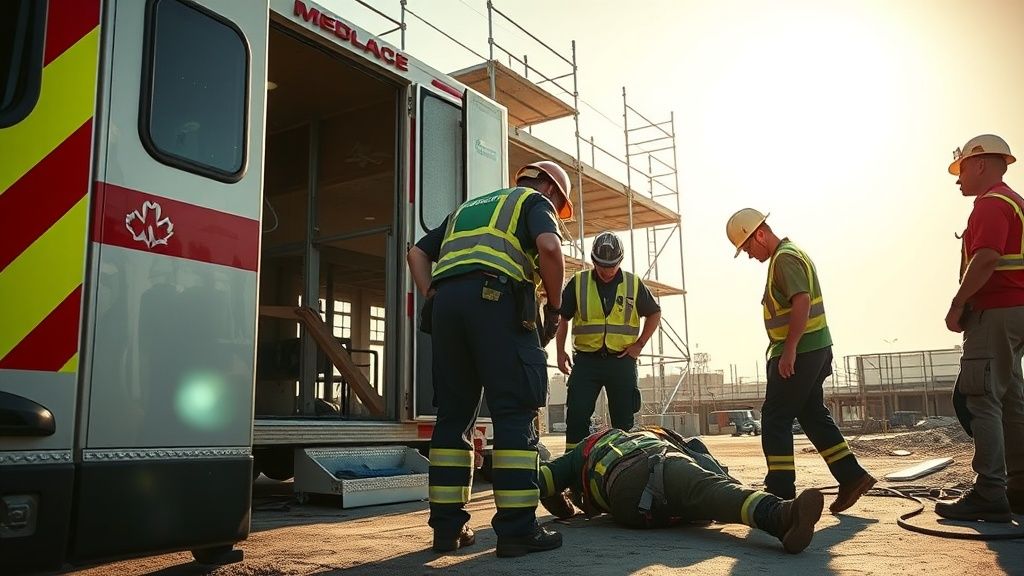
Construction is California's most injury-prone industry, with falls from elevation being the leading cause of fatal construction injuries.
Here is a quick summary of all eight industries, followed by the specialist depth you need to protect your claim.
The 8 California industries with the most workplace injuries:
- Construction, falls, struck-by hazards, and equipment accidents
- Healthcare and Nursing, overexertion, patient-handling injuries, and workplace violence
- Warehousing and Logistics, musculoskeletal injuries, forklift accidents, and cumulative trauma
- Agriculture, heat illness, pesticide exposure, and repetitive harvesting strain
- Manufacturing, machinery injuries, chemical exposure, and repetitive stress
- Transportation and Delivery, vehicle collisions, loading accidents, and overexertion
- Hospitality and Food Service, slip-and-fall, burns, cuts, and repetitive strain
- Retail, slips, overexertion from stocking, and workplace violence
1. Construction
Construction workers face some of the most dangerous daily conditions of any occupation in California. The federal Occupational Safety and Health Administration (OSHA) identifies what it calls the "Fatal Four", falls, struck-by incidents, electrocution, and caught-in/between hazards, as the four causes responsible for the majority of construction fatalities nationwide. In California, falls from scaffolding, ladders, and unprotected edges are the single leading cause of fatal construction injuries.
Under Cal. Lab. Code §3600, any injury that arises out of and in the course of employment is compensable. For construction workers, that includes acute fractures from falls, traumatic brain injuries, crush injuries from equipment, and cumulative shoulder or knee damage from years of physical labor. There is no minimum employment period to qualify. A worker injured on day one of a new construction job still has full workers' comp rights.
Construction workers are also among the most common candidates for a third-party claim alongside their workers' comp case. When a general contractor's negligence, a subcontractor's unsafe equipment, or a defective tool caused the injury, the injured worker may be able to pursue both a workers' comp claim through the DWC (Division of Workers' Compensation) and a separate personal injury lawsuit against the at-fault third party.
Practical takeaway: Report your injury to your employer in writing within 30 days under Cal. Lab. Code §5400. A missed deadline can cost you your entire claim.
2. Healthcare and Nursing
Healthcare workers in California, especially nurses and patient-care aides, file some of the highest numbers of musculoskeletal injury claims of any industry.
Hospitals, skilled nursing facilities, home health agencies, and clinics employ hundreds of thousands of Californians who face injury risks most office workers never consider. Patient handling, lifting, repositioning, and transferring patients, causes severe back and shoulder injuries at high rates. Beyond overexertion, healthcare workers face needle-stick injuries and bloodborne pathogen exposure, as well as a documented risk of workplace violence from patients and visitors.
Cal. Lab. Code §3600 covers all of these injury types. A nurse who tears a rotator cuff repositioning a patient has a compensable workers' comp claim. So does a home health aide who develops carpal tunnel syndrome from repeated transfers over years of service, that is a cumulative trauma claim under Cal. Lab. Code §3208.1.
Healthcare workers are also protected against retaliation for filing a claim. Under Cal. Lab. Code §132a, it is illegal for an employer to discriminate against an employee because they filed a workers' comp claim. If your employer cuts your hours, changes your assignment, or threatens your job after you report an injury, that is a separate violation with its own penalties.
Practical takeaway: Document every incident, including near-misses involving patient handling or aggressive patients. A written record supports your claim if symptoms develop days or weeks after the event.
3. Warehousing and Logistics
The rapid growth of e-commerce and same-day delivery has made warehousing one of California's fastest-growing industries, and one of its most injury-prone. Workers in distribution centers spend shifts lifting heavy boxes, operating forklifts and pallet jacks, and performing the same motions thousands of times per day. The result is a high rate of both acute injuries (forklift accidents, falling inventory, loading dock falls) and cumulative trauma (chronic back strain, carpal tunnel, shoulder impingement).
Cumulative trauma disorders are explicitly compensable in California. Under Cal. Lab. Code §3208.1, an injury can be "either a specific injury occurring as the result of one incident" or "a cumulative injury occurring as repetitive mentally or physically traumatic activities." This means a warehouse picker who develops chronic lumbar strain after two years of heavy lifting has a valid claim even if there is no single dramatic incident to point to.
The statute of limitations for a cumulative trauma claim runs from the date the worker knew or should have known the injury was work-related. That date is not always obvious, which is one reason cumulative trauma claims are frequently denied at first. An experienced workers' comp attorney can establish the correct date of injury and preserve the claim.
Practical takeaway: If you have been diagnosed with a repetitive strain condition or a back injury and you work in a warehouse, the injury may be covered even if you cannot name the day it started. Call us at 818-794-9947 to walk through your specific facts.
4. Agriculture
In California, workers' comp benefits apply regardless of immigration status under Cal. Lab. Code §1171.5, covering workers in every industry on this list.
California is the largest agricultural state in the country, and its farm workforce faces a unique combination of hazards. Heat illness is the most visible risk, California's Cal/OSHA Heat Illness Prevention Standard (Title 8, CCR §3395) requires shade, water, and rest breaks for outdoor workers when temperatures exceed 80 degrees. When employers fail to follow these rules and a worker suffers heat exhaustion or heat stroke, that is a compensable workers' comp injury.
Beyond heat, agricultural workers deal with pesticide exposure (which can cause both acute poisoning and long-term respiratory or neurological conditions), musculoskeletal injuries from repetitive harvesting and pruning, and traumatic injuries from farm equipment. Many agricultural workers are hesitant to file because they fear immigration consequences. California law is clear on this point: under Cal. Lab. Code §1171.5, immigration status does not affect a worker's rights under the Labor Code, including the right to file a workers' comp claim.
Practical takeaway: If your employer did not provide shade, water, or rest breaks during a heat event and you became ill, report the illness immediately and request a DWC-1 claim form from your employer. Under Cal. Lab. Code §5401, your employer must provide that form within one working day of your request.
5. Manufacturing
Manufacturing workers in California operate heavy machinery, handle hazardous chemicals, and perform highly repetitive tasks across automotive, aerospace, food processing, electronics, and other sectors. This combination produces a wide variety of serious injuries: crush injuries and amputations from machinery, burns and chemical exposures from industrial substances, and repetitive stress injuries from assembly-line work.
California workers' comp covers all of these under Cal. Lab. Code §3600. For chemical exposure injuries that develop over time, the date of injury is calculated under the same cumulative trauma rules as any repetitive stress claim, the clock starts when the worker first suffered disability and knew or should have known it was work-related.
Manufacturing also generates some of the strongest third-party claim opportunities of any industry. When a worker is injured because a piece of machinery was defectively designed or manufactured, a product liability lawsuit against the equipment maker can be pursued alongside the workers' comp case. These cases are handled under California's personal injury statutes, separately from the workers' comp system, and can recover damages that workers' comp does not pay, including full pain and suffering.
Practical takeaway: If a machine malfunction, a defective guard, or a manufacturer's design flaw contributed to your injury, preserve the equipment if possible and do not allow it to be repaired or modified before it is documented. Evidence of the defect is essential to a third-party claim.
6. Transportation and Delivery
A work-related vehicle accident in the transportation or delivery industry can trigger both a workers' comp claim and a third-party personal injury lawsuit at the same time.
Truck drivers, delivery drivers, rideshare drivers working under commercial policies, and couriers face injury risks both on the road and during loading and unloading operations. Motor vehicle collisions are a leading cause of occupational fatalities across all industries, and transportation workers are on the road, and exposed to that risk, for their entire shift. Loading dock injuries, overexertion from repeated heavy package handling, and slip-and-fall injuries at delivery stops are also common.
When a work-related vehicle accident is caused by another driver's negligence, the injured worker has two separate legal options. First, a workers' comp claim through the WCAB (Workers' Compensation Appeals Board) covers medical treatment and a portion of lost wages regardless of fault. Second, a personal injury lawsuit against the at-fault driver can recover full lost wages, pain and suffering, and other damages that workers' comp does not cover. Both claims can proceed simultaneously, with the workers' comp insurer potentially having a right to reimbursement from any third-party recovery, a process called subrogation.
Independent contractor status is a recurring issue in this industry. Some delivery companies classify workers as independent contractors to avoid providing workers' comp coverage. California law, specifically Cal. Lab. Code §2775 (the ABC test established by Assembly Bill 5), makes it difficult for companies to legitimately classify workers who perform core business functions as contractors. If you were told you are an independent contractor and denied workers' comp benefits, that classification may not hold up.
Practical takeaway: Being told you are an independent contractor does not automatically mean you are one under California law. If you were injured in a delivery or transportation job and your employer denied coverage, call 818-794-9947 before accepting that answer.
7. Hospitality and Food Service
Restaurant kitchens, hotel housekeeping departments, and catering operations are physically demanding environments where injuries happen daily. Wet floors cause slip-and-fall accidents. Hot surfaces and open flames cause burns. Repetitive knife work, heavy tray carrying, and extended time on hard floors cause cumulative musculoskeletal injuries. Housekeepers develop shoulder and back conditions from years of making beds, pushing heavy carts, and cleaning bathrooms in awkward positions.
All of these injuries are compensable under Cal. Lab. Code §3600. Hospitality is also an industry where workers are sometimes wrongly told that a tip or an informal cash arrangement means they are not covered. Coverage under California workers' comp is tied to the employment relationship, not the method of payment. A worker paid partly in cash is still an employee with full workers' comp rights if the employer controls how, when, and where they work.
Workplace violence is also a documented hazard in hospitality, particularly in late-night establishments. When a worker is injured in a violent incident at work, the psychological injuries resulting from that event can also be compensable. Under Cal. Lab. Code §3208.3, a psychiatric injury is compensable if the employment contributed to the injury to a substantial degree and certain threshold conditions are met.
Practical takeaway: If you were hurt in a kitchen accident, a slip on a wet floor, or a violent incident at a restaurant or hotel, you have the right to file a workers' comp claim. Your immigration status and method of pay do not change that right.
8. Retail
Cumulative trauma injuries caused by repetitive motion are compensable under Cal. Lab. Code §3208.1 and are common in warehousing, agriculture, healthcare, and retail.
Retail workers are on their feet for extended shifts, frequently lift and stock heavy merchandise, and increasingly face workplace violence from customers. Back injuries from stocking high shelves, knee and ankle injuries from extended standing on hard concrete floors, and repetitive wrist injuries from scanning thousands of items are the most common physical claims in retail.
Workplace violence in retail has increased significantly in recent years. A worker who is assaulted by a customer or a shoplifter and suffers physical injury has a compensable workers' comp claim. If that same worker develops anxiety, post-traumatic stress, or depression as a result of the violent incident, the psychological injury may also be compensable under Cal. Lab. Code §3208.3.
California requires employers to carry workers' comp insurance under Cal. Lab. Code §3700, meaning injured workers in any of these eight industries have the right to file a claim from day one.
Retail employers are required to carry workers' comp insurance under Cal. Lab. Code §3700. An employer who operates without coverage is subject to criminal penalties and civil liability. Injured workers whose employer illegally operates without coverage can file a claim directly with the Uninsured Employers Benefits Trust Fund (UEBTF) through the DIR (Department of Industrial Relations).
Practical takeaway: If your retail employer tells you they "don't have workers' comp" or tries to pay your medical bills out of pocket to avoid a formal claim, consult an attorney before accepting any informal arrangement. You may be giving up significant rights.
What to Do If You Work in One of These Industries and Were Injured
Regardless of your industry, the steps after a workplace injury are the same under California law:
- Report the injury to your employer in writing as soon as possible. Cal. Lab. Code §5400 requires written notice within 30 days of the injury, or within 30 days of discovering the injury is work-related for cumulative trauma claims.
- Request a DWC-1 claim form. Under Cal. Lab. Code §5401, your employer must give you this form within one working day of learning about your injury.
- See a doctor within the employer's Medical Provider Network (MPN) for the first 30 days, unless it is an emergency. After 30 days, you have more flexibility.
- Do not give a recorded statement to the insurance adjuster without speaking to an attorney first. Adjusters work for the insurer, not for you.
- Contact a workers' comp attorney. We've recovered over $150,000,000 for injured California workers, and we handle cases in construction, healthcare, warehousing, agriculture, manufacturing, transportation, hospitality, and retail.
If you've been injured at work, call us at 818-794-9947 for a free case review. No fee unless we win. We serve injured workers throughout Southern California in English and Spanish.
Frequently Asked Questions
What industries have the most workplace injuries in California?
Construction, healthcare and nursing, warehousing and logistics, agriculture, and manufacturing consistently produce the highest numbers of serious workers' comp claims in California. These industries involve physical labor, heavy equipment, repetitive tasks, and exposure to hazardous conditions that create elevated injury risk for workers every shift.
What are the most dangerous jobs in California?
By injury severity and fatality rate, construction occupations, agricultural field work, truck and delivery driving, and industrial manufacturing roles rank among the most dangerous in California. Construction fatalities are often caused by the OSHA Fatal Four: falls, struck-by incidents, electrocution, and caught-in/between events. Agricultural workers face heat illness and equipment hazards. Truck drivers face serious vehicle collision risks throughout every working day.
Which workers file the most workers' comp claims in California?
Workers in physically demanding industries file the highest volume of claims. Construction workers, healthcare and nursing staff, and warehouse employees collectively account for a large portion of California's workers' comp filings. Claims are not limited to dramatic accidents, cumulative trauma injuries from repetitive tasks are among the most common claim types filed across multiple industries.
Does workers' comp cover all types of injuries in these industries?
Yes. California workers' comp covers acute injuries, cumulative trauma disorders, occupational illnesses, heat illness, chemical exposures, and psychiatric injuries that meet the threshold under Cal. Lab. Code §3208.3. Coverage applies from the first day of employment, and the employer's workers' comp insurer pays for medical treatment and a portion of lost wages regardless of who was at fault for the injury.
Can undocumented workers in California file a workers' comp claim?
Yes. Under Cal. Lab. Code §1171.5, immigration status does not affect a worker's rights under California's Labor Code, including the right to file a workers' comp claim. Undocumented workers in construction, agriculture, hospitality, and every other industry have the same access to the workers' comp system as any other employee.
What if my employer says I'm an independent contractor and denies my claim?
Being labeled an independent contractor does not automatically disqualify you from workers' comp benefits in California. Under Cal. Lab. Code §2775, the ABC test determines whether a worker is truly an independent contractor. If you perform work that is core to the employer's business and work under the employer's direction, you may legally be an employee entitled to coverage. An attorney can evaluate your specific working arrangement.
What is cumulative trauma and is it covered by workers' comp?
Cumulative trauma is an injury caused by repetitive physical activities over time rather than by a single incident. Under Cal. Lab. Code §3208.1, cumulative trauma is explicitly recognized as a compensable workplace injury in California. It is common in warehousing, healthcare, agriculture, manufacturing, and retail. The date of injury for a cumulative trauma claim is typically the date the worker first suffered disability and knew or should have known the condition was related to work.
How long do I have to file a workers' comp claim in California?
You generally have one year from the date of injury to file a workers' comp claim in California. For cumulative trauma injuries, the one-year period begins when you knew or should have known the injury was work-related. You also must notify your employer in writing within 30 days of the injury under Cal. Lab. Code §5400. Missing either deadline can seriously harm or eliminate your claim, so contacting an attorney as early as possible is important.